“Securities Financing Transactions, specifically repo and securities lending, serve as the foundational plumbing of the global financial ecosystem.” Finadium, June 19, 2026.
*****
“Yes, that repo, the $13 trillion market that sits in the deepest, darkest depths of Wall Street’s plumbing, where financial firms borrow and lend cash against securities for short periods of time. The kind of market that the average person blissfully won’t ever have to contemplate, but that is essential to keeping the other more shiny ones going.” Bloomberg Crypto Newsletter, May 14, 2026.
*****
“Repo makes a lot of people’s eyes glaze over, but it’s absolutely essential to understand the modern financial system.” FT Alphaville, January 13, 2026.
*****
“The repo market, where Treasuries serve as collateral for overnight borrowing, is the circulatory system of modern finance.” Peter C. Earle, October 20, 2025.
*****
“The U.S. repurchase agreement (repo) market is one of the world’s most important financial markets, yet it remains surprisingly opaque.” FEDS Notes, Board of Governors of the Federal Reserve System, July 11, 2025.
*****
“U.S. repo markets are among the largest and most liquid short-term funding markets in the world. … Overnight repos backed by Treasuries are the most common source of funding in financial markets.” Office of Financial Research, 2024 Annual Report to Congress, November 20, 2024.
*****
A central clearing party for repo “would arguably become one of the most systemic entities in the entire financial system.” Bureau for International Settlements, Central clearing in government bond markets: keeping the “safe asset” safe? September 19, 2024.
*****
“To a far greater extent than is commonly understood, our financial sector funds itself with extremely short-term debt.” Lev Menand & Morgan Ricks, Rebuilding Banking Law: Banks as Public Utilities, July 17, 2024.
*****
“In the US, total federal debt nearly quadrupled from $9 trillion to $34 trillion between 2007 and 2023 due in substantial part to huge expenditures for combating financial crises.” Arthur E. Wilmarth, Jr., The Hill, June 11, 2024.
*****
“I believe that nonbank financial intermediaries (including asset managers) that rely on deposit substitutes for short-term funding present very serious risks that should be addressed by enacting a new Glass-Steagall Act.” Arthur E. Wilmarth, Jr., April 16, 2024.
*****
“One might say that lawmakers’ and policymakers’ failure to answer this question coherently (What is a deposit, legally speaking?) is the single biggest problem for financial stability policy.” Vanderbilt law professor Morgan Ricks tweet, February 29, 2024.
*****
“These days the financial markets are filled with shadow banks, broker-dealers, mortgage companies, and REITs that are all lending long and borrowing short.” Scott E.D. Skyrm, The Repo Market, 2023.
*****
“Repurchase agreement markets are a massive, but rarely noted, aspect of the financial system. In simple terms, repurchase agreements (repos) function like a pawnshop. …. repo markets are like the plumbing of the global financial system: safely ignored unless something blocks up the system.” S&P Global. November 7, 2023.
*****
“Financial stability requires a massive reversal in financial regulatory policy as it has been adopted since the 1990s. The regulators got it completely wrong and have transformed finance into a house of cards” because it is built on repo contracts. Carolyn Sissoko, economist at University of the West of England. Twitter. November 3, 2021.
*****
“Repo is a heavily traded market with an enormous amount of turnover on a daily basis, and it represents the bedrock of the Treasury market. It is foundational to the functioning of financial markets.” Michael de Pass, global head of U.S. Treasury trading at Citadel Securities. The Wall Street Journal. August 8, 2021.
*****
“The March meltdown showed we still don’t collect the data we need to spot risk in the repurchase and securities lending markets.” Greg Feldberg, Research Scholar at the Yale School of Management. December 4, 2020.
*****
“The Treasury market, the repo market, and the mortgage-backed securities market represent the heart of the circulatory system of our financial system and our economy, and indeed the global economy. When they are working smoothly, all the other parts of the system can perform as they should. But, the opposite is true as well.” John C. Williams, CEO of the New York Fed, September 29, 2020.
*****
“The events of March 2020 provide evidence of structural instability in the repo market …because the repo market is now so large, in a crisis it acts as a coordination device generating an overwhelming volume of sell orders that all demand to be filled simultaneously. No market structure can possibly … act on such a large scale throughout global markets. Our current financial structure is designed to fail – and to be bailed out by dramatic central bank action.” Carolyn Sissoko, senior lecturer in economics at the University of the West of England, August 24, 2020.
*****
“A better understanding of the interdependencies among firms and market participants in the repo market is needed. The unexpected volatility in repo markets in September 2019 underscores the need for more research and analysis in this area.” Financial Stability Oversight Council, January 2020.
*****
“The particular crisis of 2007–2009 manifested itself in new forms of short-term debt runs in which repurchase agreements, commonly known as repos, played a major role. Before the crisis, each of the major dealers — again, Goldman Sachs, Morgan Stanley, Lehman, Bear Stearns, and Merrill Lynch — obtained hundreds of billions of dollars in overnight credit in the repo market.” Stanford University professor Darrell Duffie, Journal of Economic Perspectives, Winter 2019.
*****
“Of course, a run on nondeposit, ‘shadow’ funding was a central feature of the financial crisis itself, most notably in the repo markets.” — Daniel Tarullo, 2009-2017 Federal Reserve Governor for Supervision and Regulation, Journal of Economic Perspectives, Winter 2019.
*****
“So-called ‘repos’ are a way for borrowers to raise short-term funding by agreeing to buy and sell securities over very short timeframes. In practice they function as short-term loans and are a vital, under-appreciated lubricant of the financial system.” — Robin Wigglesworth in the Financial Times, January 3, 2019.
*****
“In many ways, the repo market represents the foundation stone of the financial system, vitally facilitating the flow of cash and securities
across the system.” — The GFMA and ICMA Repo Market Study: Post-Crisis Reforms and the Evolution of the Repo and Broader SFT Markets. December 17, 2018.
*****
“The problem across the entire banking system (in ’08) was that of a mega bank run.” — Columbia University historian Adam Tooze, author of Crashed. September 25, 2018.
*****
“Panic-type phenomena occurred in a variety of contexts in the recent financial crisis. … Of particular concern were funding pressures in the critical market for repurchase agreements (repos), which are used heavily by broker-dealers and others to finance credit holdings.” Ben Bernanke, Brookings Institution, September 2018.
*****
“Although the deterioration of household balance sheets and the associated deleveraging likely contributed to the initial economic downturn and the slowness of the recovery, I find that the unusual severity of the Great Recession was due primarily to the panic in funding and securitization markets, which disrupted the supply of credit.” — Ben Bernanke, “The Real Effects Of The Financial Crisis,” September 13-14,2018.
*****
“Prior to the crisis, repo was a lightly regulated multi-trillion dollar market which funded nearly half of the asset holdings by the major investment banks.” – Gary Gorton, Toomas Laarits, Andrew Metrick, “The Run On Repo and The Fed’s Response,” July 2018.
*****
“Bank regulation since the 2008 crisis has taken a wrong turn. In response to widespread condemnation of ‘bailouts,’ Congress included stringent new restrictions on Fed lending in the Dodd-Frank Wall Street Reform Act of 2010. … it is vital to the future safety of the financial system that Congress correct its 2010 mistake.” – Laurence M. Ball, The Fed and Lehman Brothers: Setting the Record Straight on a Financial Disaster, 2018.
*****
“The 2008 crises on Wall Street were 21st century versions of bank runs. They originated with bad investments in real estate, but losses from these investments were not the direct cause of Lehman’s sudden collapse or of the near-collapses of the institutions that the Fed chose to rescue. Instead, the fatal development was a loss of confidence by other financial institutions, which led them to suddenly refuse to renew short-term loans that Lehman and the other distressed firms needed to operate.” – Laurence M. Ball, The Fed and Lehman Brothers: Setting the Record Straight on a Financial Disaster, 2018.
*****
“When mortgage defaults started rising, many financial institutions experienced a run on their short-term liabilities. These liabilities were not traditional bank deposits but rather repurchase agreements, called repos. But the forces at work were much the same.” – N. Gregory Mankiw, professor of economics at Harvard University in The New York Times, July 27, 2018.
*****
“The excessive dependence on short-term wholesale funding contributed to the failure of some of the largest investment and commercial banks, such as Bear Stearns, Lehman Brothers, and Northern Rock.” — Songjiwen Wu and Hossein Nabilou, “Repo Markets Across the Atlantic: Similar but Unalike,” April 19, 2018.
*****
A standard narrative “has it that the financial meltdown of 2008 was caused by an overextension of mortgages to weak borrowers, repackaged and then sold to willing lenders drawn in by faulty risk ratings for these mortgage back securities. To many, mortgage backed securities and rating agencies became the key villains of that financial crisis,” but this is wrong, write Juan Ospina of Banco de la Republica de Colombia and Harald Uhlig of the University of Chicago in “Mortgage-Backed Securities And The Financial Crisis of 2008: A Post Mortem,” April 2018.
*****
“The 2007-2008 Financial Crisis was a horrific global preview of the consequences of depending on repo-based funding when the financial system becomes vulnerable to risk. Repo funding drove the entire American financial system into the foster care of the federal government.” — Kurt Dew, Seeking Alpha, Visiting lecturer, Northeastern University, April 11, 2018.
*****
“A financial crisis is an event in which the holders of short-term debt come to question the collateral backing that debt.” — “Collateral Damage,” Gary Gorton and Toomas Laarits, Yale School of Management, February 2018.
*****
“In a classic banking panic, holders of demand deposits want their cash back because they do not trust the value of the banks’ loan portfolios backing the deposits. Deposit insurance solves this problem. In the crisis of 2007-8 the holders of short-term debt, in the form of repo, came to distrust the bonds used as collateral and increased haircuts, generating a run on the banking system.” — “Collateral Damage,” Gary Gorton and Toomas Laarits, Yale School of Management, February 2018.
*****
“Runs present a sadly familiar set of perils when they happen to regulated and protected banks. They create more complicated perils when they happen to other types of financial institutions that are less regulated, as was the case in the United States before the 2008 crisis.” –Timothy Geithner, “Are We Safe Yet?” January/February 2017.
*****
“Repos were 2008’s smoking gun.” — Michael Manna, head of fixed-income financing trading at Barclays, as quoted in the Wall Street Journal, November 30, 2017.
*****
“Excessive reliance on repo market funding may quickly turn into a source of instability for the financial system as a whole. The scars from the great financial crisis are still visible today.” — Benoît Cœuré, executive board member, European Central Bank, November 14, 2017.
*****
“Excessive use of repos can indeed weaken the financial system by facilitating the use of short-term funding and the build-up of leveraged positions backed by collateralized borrowing. It can also increase the interconnectedness within the financial system.” — The Bank of International Settlements, April 12, 2017.
*****
“The U.S. repo market provides more than $3 trillion in funding every day to securities dealers and many others. But its vulnerability to runs and fire sales poses potential threats to financial stability.” — Richard Berner, director, Office of Financial Research, January 25, 2017.
*****
“Today, it is not the heavily regulated traditional commercial banks that are the main source of concern. Rather, it is the lightly regulated nonbank financial institutions that are deeply reliant on uninsured short-term debt that pose significant risk.” — Paul Volcker and the Volcker Alliance, “Unfinished Business, Banking In The Shadows,” December 5, 2016.
*****
“At the heart of the crisis were contagion effects … and the withdrawal of much of the short-term wholesale funding on which many large financial firms and the shadow banking system had come to rely. … The period was defined by runs, not on bank deposits (at least not insured bank deposits), but on short-term wholesale funding … investors refused to roll over existing repurchase agreements (or repos) and similar extensions of credit, much less to offer new lending.” — Federal Reserve Governor Daniel Tarullo, December 2, 2016.
*****
“Securities lending was partly responsible for the collapse of the large insurance company AIG when the market seized in September 2008.” — Economists Stephen G. Cecchetti and Kermit L. Schoenholtz, November 7, 2016.
*****
“Data describing bilateral repurchase agreements and securities lending were scant in the run up to the financial crisis, and they still are.” — Richard Berner, director, Office of Financial Research. October 27, 2016.
*****
“The crisis brought to light unique risks from the excessive use of short-term wholesale funding and repo agreements in particular …. Looking back, it is easy to see how certain behaviours and market practices necessitated government intervention with wholesale funding and collateral management reforms becoming a cornerstone of global regulators’ post-crisis efforts to reduce risk in the financial system.” — James Slater, global head of
securities finance at BNY Mellon Markets, Securities Lending Times. September 29, 2016.
*****
“I continue to believe that the post-crisis work to create a solid regime to protect financial stability cannot be deemed complete without a well-considered approach to regulating runnable funding.” — Federal Reserve Governor Daniel Tarullo. July 12, 2016.
*****
“After four years of efforts, regulators and the financial firms with the most at stake have failed to extinguish systemic risk in a crucial short-term lending market (the repurchase market} that greases the wheels of trading in U.S. Treasuries.” — Liz McCormick, Bloomberg. May 25, 2016.
*****
“If a bank goes bankrupt, derivatives and repo counterparties can just demand their money back as though the Bankruptcy Code doesn’t exist.” — Matt Levine, BloombergView. May 4, 2016.
*****
“The Great Financial Crisis of 2007-2009 exposed the ineffectiveness of the relevant regulations in place at the time. Yet even now and despite the crisis, the rules remain inadequate and flawed.” — Anat R. Admati, professor Graduate School of Business, Stanford University, May 2016.
*****
“Data gaps persist in securities financing transactions, including repo and securities lending. The markets for these critical short-term funding instruments remain vulnerable to runs and asset fire sales. Yet comprehensive data on so-called bilateral repo and securities lending transactions are scant.” — Richard Berner, Director, Office of Financial Research. April 12, 2016.
*****
“As long as the music plays and the players keep going round (and the expectation is that the music should never ever stop anyway), banking theory dictates it matters not whether there’s enough chairs for everybody because nobody needs the chairs right now anyway.” — Izabella Kaminska, “Something very significant is happening in repo,” ftalphaville, March 22, 2016.
*****
“As we look to the future of U.S. wholesale funding, we expect repo to serve as the circulatory system for broader financial markets who have become increasingly reliant on the smooth transfer of collateral.” — BNY Mellon and PwC Financial Services, “The Future of Wholesale Funding Markets,” December 10, 2015.
*****
“Market interest rates are effectively determined in the collateral market, such as the repo, or repurchase market, where banks and other financial institutions exchange collateral (such as US Treasuries, mortgage securities, corporate debt, equities) for money.” –Manmohan Singh, Financial Times, November 23, 2015.
*****
“In many ways, repos are the building blocks of financial markets. To mess with repo is to mess with the DNA of the markets.” — Andy Hill, International Capital Market Association. September 2015.
*****
“The market for repurchase agreements is an elemental building block of modern financial markets. Whether used as a money market instrument, a source of funding, a means of mobilising collateral, or the transmission mechanism for monetary policy, it is difficult to think of any financial instrument or derivative that is not impacted in one way or another by repo rates.” — Andy Hill, International Capital Market Association. September 2015.
*****
“Nearly half of the liabilities of broker-dealers consist of short-term wholesale funding (repo and securities lending), an amount that is nearly the same as it was during the crisis.” — Federal Reserve Governor Daniel Tarullo, Brookings Institution, November 17, 2015.
*****
“I also believe that the greatest risks to financial stability are the funding runs and asset fire sales associated with reliance on short-term wholesale funding … If there is one lesson to be drawn from the financial crisis, it is that the rapid withdrawal of funding by short-term credit providers can lead to systemic problems as consequential as those associated with classic runs on traditional banks.” — Federal Reserve Governor Daniel Tarullo, Brookings Institution, November 17, 2015.
*****
“Given its vast scale and position at the center of the wholesale finance markets, repo is without doubt a critical activity. ” — Federal Reserve Governor Jerome Powell, Clearing House Annual Conference, November 17, 2015.
*****
“For the most part, the main problems during that (financial) crisis didn’t involve banks that offered both commercial and investment services. Instead, the problems were primarily at traditional investment banks. Had Glass-Steagall remained in place, the financial crisis would almost surely have happened anyway.” — Mark Thoma, MoneyWatch, November 16, 2015.
*****
“Despite of its systemic importance, the repo market remains opaque to most market participants, including even the regulators. Because no official data on repos exists, questions as basic as the overall size of the market are difficult to answer.” — Grace Xing Hu, Jun Pan, Jiang Wang, Tri-Party Repo Pricing, August 2015.
*****
Financial panics are increasing in frequency. While they used to be driven by depositors lining up to get their money, nowadays, “the problem is that institutional creditors do the same thing in the repo market.” — John Maxfield, The Motley Fool, March 19, 2015.
*****
“The repo market, the largest short-term funding market … still remains susceptible to asset fire sales and runs.” — Office of Financial Research, December 2014.
*****
Repo “is the most important plumbing of the financial system. If the industry cannot come up with a solution, there is some implicit suggestion the Fed would have to step in in a more direct way.” — Darrell Duffie, professor of finance at Stanford University, October 9, 2014.
*****
“Without repo, there is no leveraged positioning in financial markets; without leverage and the constant hypothecation there is nothing to maintain the stock market’s exuberance.” Repo markets provide “the glue that holds stock markets together.” — Tyler Durden, Zero Hedge, June 27, 2014.
*****
“The Repo market includes both the banking system and the shadow banking system, all in one place. It’s the overnight borrowing and lending market of the entire financial system.” — Scott E.D. Skyrm, May 21, 2014.
*****
“The potential for repo markets to act as a channel for financial instability in the event of (or perception of) financial distress at a large dealer remains ..” — Standard and Poor’s, May 13, 2014.
*****
“Regulators and policymakers currently have no reliable, ongoing information on bilateral repo market activity.” — Financial Stability Oversight Council, May 7, 2014.
*****
“These runs were the primary engine of a financial crisis from which the United States and the global economy have yet to fully recover.” — Federal Reserve Chair Janet Yellen, April 15, 2014.
*****
“The banks remain dangerously interconnected and vulnerable to sudden runs because of their dependence on short-term, often overnight borrowing through the multitrillion-dollar repurchase agreement, or repo, market. — Jennifer Taub, associate professor, Vermont Law School, April 4, 2014.
*****
“The 2007–2008 financial crisis was driven more by disruptions in the Securities Financing Transactions markets than by disruptions in the over-the-counter derivative markets.” — Federal Reserve Governor Daniel K. Tarullo, November 22, 2013.
*****
“The money market fund industry and the repo market is really the major fault line that goes right under Wall Street.” — Dennis Kelleher, CEO of Better Markets, Bankrate.com, July 24, 2013.
*****
Repo: “The silently beating heart of the market.” — Treasury Borrowing Advisory Committee, July 2013.
*****
Under Basel capital rules, “repos among financial institutions are treated as extremely low risk, even though excessive reliance on repo funding almost brought our system down. How dumb is that?” — Sheila Bair, chair of the Systemic Risk Council and 2006-2011 Chair of the FDIC, June 9, 2013.
*****
“The trigger for the acute phase of the financial crisis was the rapid unwinding of large amounts of short-term wholesale funding that had been made available to highly leveraged and/or maturity-transforming financial firms.” –Janet Yellen, Vice Chair Federal Reserve, June 2, 2013.
*****
“The repo market wasn’t just a part of the meltdown. It was the meltdown.” –David Weidner, Wall Street Journal, May 29, 2013.
*****
“There would clearly be no ‘shadow banking’ industry without the ability to quickly liquidate Repo trades in the event of a bankruptcy,” Scott Skyrm, April 3, 2013.
*****
“While regulated banks have faced far tighter oversight following the financial crisis, the shadow-banking market remains a source of potential instability. It is worth remembering that runs here, rather than traditional bank runs, were a cause of the crisis and led to seizures of credit markets.” — David Reilly, Wall Street Journal, February 19, 2013.
*****
“It is worth recalling that the trigger for the acute phase of the financial crisis was the rapid unwinding of large amounts of short-term funding that had been made available to firms not subject to consolidated prudential supervision.” — Daniel K. Tarullo, Federal Reserve Governor, February 14, 2013.
*****
“I don’t think we should be comfortable with a situation in which extensive maturity transformation continues to take place without the appropriate safeguards against runs and fire sales.” — William C. Dudley, President, Federal Reserve Bank of New York, February 1, 2013.
*****
“The global financial crisis that began in the United States in the summer of 2007 was triggered by a bank run, just like those of 1837, 1857, 1873, 1893, 1907, and 1933 … and it has had devastating effects that continue today.” — Gary B Gorton, Yale University, “Misunderstanding Financial Crises,” November 2012.
*****
“Currently, the drivers of systemic risk remain largely intact, and shadow banking appears poised to grow considerably, and dangerously, if it does not acquire the necessary market discipline to shape risk-taking activities.” — From “Understanding the Risks Inherent in Shadow Banking” by David Luttrell, Harvey Rosenblum, and Jackson Thies, Federal Reserve Bank of Dallas, November 2012.
*****
“The essence of shadow banking is to make loans, securitize them, sell the securities and insure them, and actively trade all the financial assets involved. In effect, traditional relationship banking is replaced by a collateralized market system with the repo market at its heart.” –William R. White, Organisation for Economic Co-operation and Development, August 2012.
*****
“What was different about this crisis was that the institutional structure was different. It wasn’t banks and depositors. It was broker-dealers and repo markets. It was money market funds and commercial paper …,” –Federal Reserve Chairman Ben Bernanke, March 27, 2012.
*****
“The Federal Reserve was forced to take extraordinary policy actions beginning in 2008 to counteract the effect of (tri-party repo) flaws and avert a collapse of confidence in this critical financing market. These structural weaknesses are unacceptable and must be eliminated.” –Federal Reserve Bank of New York, February 15, 2012.
*****
“Despite the Dodd-Frank financial reform bill and its directive to address this issue, the problem of bank runs in the shadow system — a key factor in the financial sector collapse — has not yet been solved.” –Mark Thoma, Professor of Economics, University of Oregon, February 13, 2012.
*****
“Repurchase agreements (repo) are the largest part of the ‘shadow’ banking system: a network of demand deposits that, despite its size, maturity, and general stability, remains vulnerable to investor panic.” –Jeff Penney, senior advisor, McKinsey & Company, June 2011.
*****
“What happened in September 2008 was a kind of bank run. Creditors lost confidence in the ability of investment banks to redeem short-term loans, leading to a precipitous decline in lending in the repurchase agreements (repo) market.” –Robert E. Lucas, Jr., Nancy L. Stokey, visiting scholars, Federal Reserve Bank of Minneapolis, May 2011.
*****
“The really interesting thing that happened in September 2008 was the worldwide panic in the banking system – financial institutions running on each other behind the scenes.” –-David Warsh, economic journalist, Feb. 6, 2011.
*****
“As a scholar of the Great Depression, I honestly believe that September and October of 2008 was the worst financial crisis in global history, including the Great Depression …Out of maybe the 13 of the most important financial institutions in the United States, 12 were at risk of failure within a period of a week or two.” –Federal Reserve Chairman Ben Bernanke, Financial Crisis Inquiry Report, January 2011.
*****
“Since repo financing was the basis of most of the leveraged positions of the shadow banks, a large part of the run occurred in the repo market.” –Viral V. Acharya and T. Sabri Öncü, professors, Stern School of Business, New York University, 2011.
*****
“Housing policies alone, however, would not have led to the near insolvency of many banks and to the credit-market freeze. The key to these effects was the excessive leverage that pervaded, and continues to pervade, the financial industry.” –Anat R. Admati, Professor of Finance and Economics, Graduate School of Business, Stanford University. January 30, 2011.
*****
“Without some repo reform, we are at risk for another panic.” –Gary B. Gorton, Professor of Management and Finance, Yale School of Management, November 16, 2010.
*****
“While it may be well and good for the Dodd-Frank Act to demand more oversight of mortgages and derivatives, that won’t stop the next run on repo if lenders panic over a different kind of collateral or hear a false rumor and panic for no reason at all.” –About Repo, RepoWatch.
*****
The repurchase market is “the deepest, darkest least noticed part of the market’s plumbing.” –Bethany McLean and Joe Nocera, “All the Devils are Here,” November 2010.
*****
“So far, all of this has gone largely unnoticed by the public, and that gives shadow banks the opportunity to make their case unopposed.” –Mark Thoma, Professor of Economics, University of Oregon, September 28, 2010.
*****
“… the structure of the tri-party market is so closely entwined that it creates a contagion risk as bad as anything seen in the derivatives world.” –Gillian Tett, U.S. managing editor, Financial Times, September 23, 2010.
*****
“The collapse in CDO valuations and the resulting inability to use CDOs as collateral for repo was a major, if not the major, cause of dealer illiquidity and insolvency which resulted in massive bailouts and backdoor subsidies.” –Yves Smith, Naked Capitalism blog, August 20, 2010.
*****
“Repo has a flaw: It is vulnerable to panic, that is, ‘depositors’ may ‘withdraw’ their money at any time, forcing the system into massive deleveraging. We saw this over and over again with demand deposits in all of U.S. history prior to deposit insurance. This problem has not been addressed by the Dodd-Frank legislation. So, it could happen again. The next shock could be a sovereign default, a crash of some important market — who knows what it might be?” –Gary B. Gorton, Professor of Management and Finance, Yale School of Management, August 14, 2010.
*****
“Leaving the repo market as it currently functions is not an alternative; if this market is not reformed and their participants not made to internatlize the liquidity risk, runs on the repo will occur in the future, potentially leading to systemic crises.” –T. Sabri Öncü and Viral V. Acharya, professors, Stern School of Business, New York University, July 16, 2010.
*****
“It is disconcerting that that the Act is completely silent about how to reform one of the systemically most important corners of Wall Street: the repo market, whose size based on daily amount outstanding now surpasses the total GDP of China and Germany combined.” –Viral V. Acharya and T. Sabri Öncü, professors, Stern School of Business, New York University, July 16, 2010.
*****
“… it is imperative for policymakers to assess whether shadow banks should have access to official backstops permanently, or be regulated out of existence.” –Zoltan Pozsar, Tobias Adrian, Adam Ashcraft, Hayley Boesky, Federal Reserve Bank of New York, July 2010.
*****
“The potential for the tri-party repo market to cease functioning, with impacts to securities firms, money market mutual funds, major banks involved in payment and settlements globally, and even to the liquidity of the U.S. Treasury and Agency securities, has been cited by policy makers as a key concern behind aggressive interventions to contain the financial crisis.” –Task Force on Tri-Party Repo Infrastructure, May 17, 2010.
*****
“Banks should have learned by now it’s dangerous to rely on overnight lending.” –Allan Meltzer, Professor of Political Economy, Carnegie Mellon University, March 28, 2010.
*****
“This banking system ‐‐ repo based on securitization ‐‐ is a genuine banking system, as large as the traditional, regulated banking system. It is of critical importance to the economy.” –Gary B. Gorton, Professor of Management and Finance, Yale School of Management, February 20, 2010.
*****
“I think we were primarily focused on the potential collapse of the short-term funding markets, particularly the overnight repo markets and tri-party repo markets, which would have created a contagion to many other firms.”–Federal Reserve Chairman Ben Bernanke, November 17, 2009.
*****
“The best thing to do with the shattered Humpty-Dumpty of mortgage securitization would be to toss the broken pieces into the garbage.” –Arnold Kling, Mercatus Center, George Mason University, September 28, 2009.
*****
“Given its size and importance, it is surprising that repo has such a low profile; for example, there is little discussion of it in the financial press.” — Moorad Choudhry, Head of Treasury, Europe Arab Bank plc, London, “The REPO Handbook,” September 2009.
*****
“Our banking system is not composed of the traumatized survivors of a catastrophe, it is instead composed of spoiled children who are scared of the risks inherent in leaving home to go earn a living for themselves.” – Carolyn Sissoko, economist, August 15, 2009.
*****
“Our regulators allowed the proprietary trading departments at investment banks to become hedge funds in disguise, using the ‘repo’ system – one of the most extreme credit-granting systems ever devised. The amount of leverage was utterly awesome.” –Charles T. Munger, chairman Berkshire Hathaway Inc., Spring 2009.
*****
“Repo borrowing is now by far and away the most important form of short-term finance in modern financial markets..” — Alistair Milne, Reader in Banking and Finance, City University, London, “The Fall of the House of Credit,” March 2009.
*****
“This helps explain how a relatively small quantity of risky assets was able to undermine the confidence of investors and other market participants across a much broader range of assets and markets.” –Timothy Geithner, president, Federal Reserve Bank of New York, June 9, 2008.
*****
“Until recently, short-term repos had always been regarded as virtually risk-free instruments.” Federal Reserve Board Chairman Ben Bernanke, May 13, 2008.
*****
“The repo market is as complex as it is crucial. It is built upon transactions that are highly interrelated. A collapse of one institution involved in repo transactions could start a chain reaction, putting at risk hundreds of billions of dollars and threatening the solvency of many additional institutions.” –U.S. Senate report, 1983.
*****
“Because of this widespread use in very large amounts, it is important that the repo market be protected from unnecessary disruption.” –Paul A. Volcker, Chairman, Federal Reserve Board, September 29, 1982,
*****
“With a repo loan, financial institutions could make or buy more home loans, to pool and produce more securities, to use as collateral for more repo loans. It was a neat, self-sustaining cycle of profitability and a serious growth machine.” –About Repo, RepoWatch.
*****
“Surprisingly, financial institutions that said they used securitization to offload risk had actually done just the opposite. Instead, it was the repo lenders who had no skin in the game.” –About Repo, RepoWatch.
*****
“Repo, then, was the main way that defaults in the housing market became a full blown credit panic. It was the key transmitter that carried the shock wave from the defaulting homeowner through the canyons of Wall Street to the American taxpayer.” –About Repo, RepoWatch.
*****
“In the savings and loan days, we called it Cash for Trash. In those days, thrifts lent borrowers more money than they needed and required the borrower to use it to buy a troubled property on the thrift’s books. Today, banks make repo loans to borrowers who use the money to buy troubled mortgage securities on the banks’ books, and then they use the troubled securities to collateralize the original repo loan from the bank.” –Inside Jobs, RepoWatch.
*****

 Hello,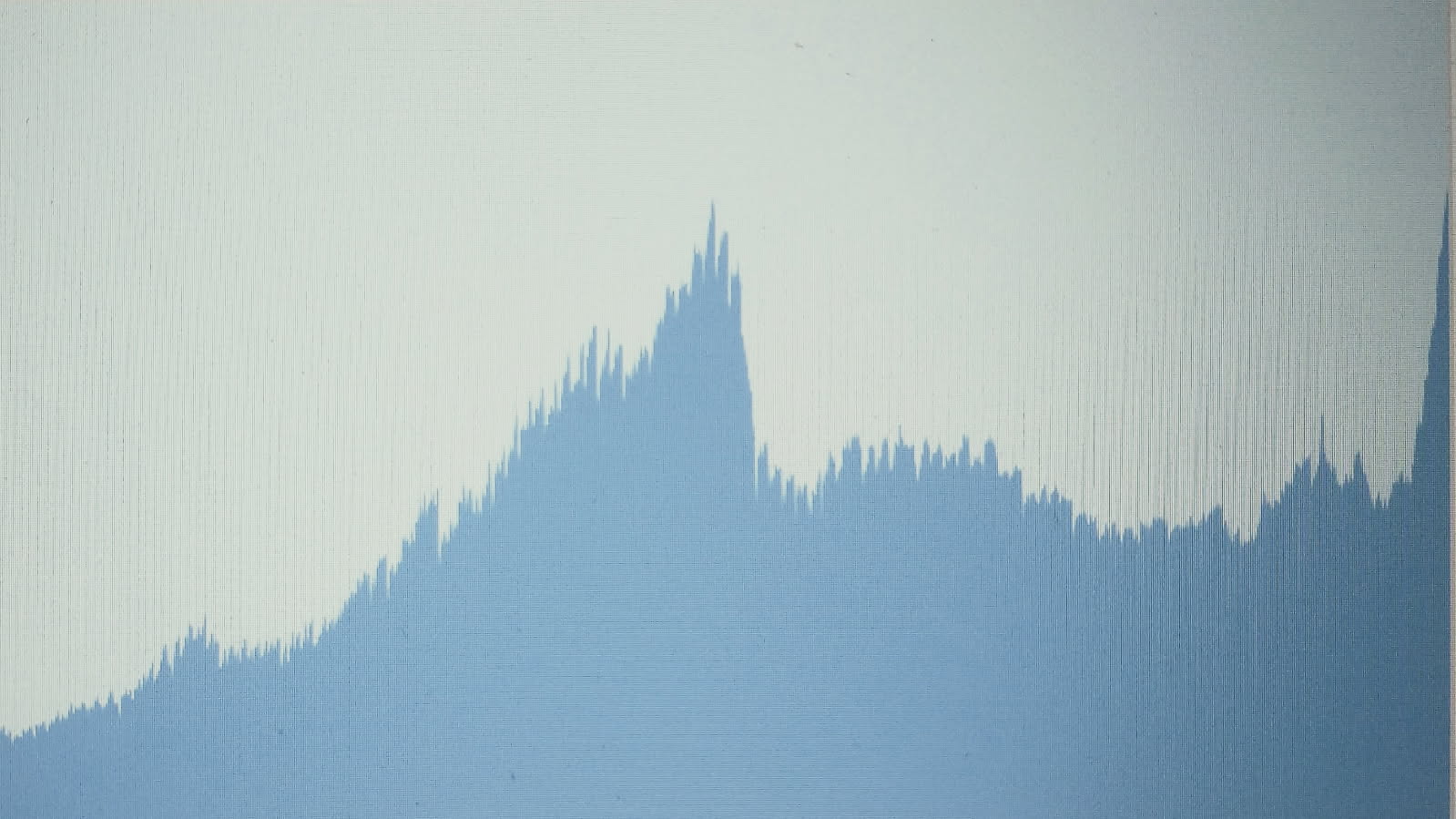
This may well be one of the most important financial site on the Internet. Mary is on to something here. But then again, she always has been. As one of journalisms finest financial investigative reporter Mary has always had a nose for trouble and courage to say what others were too timid to admit.
Repos are the bottleneck in the world of international finance, and arcane as they may seem, any reporter or finance professional with any brains should be following it. I can’t think of a better place to do that than REPOWATCH.
Thank you, Mary, for providing this site that deals with a burning issue likely to blow up the enter global financial system. Your writings are exceptionally brilliant and lucid.
Mary, thank you for the insight into the repo market. I believe you have accurately captured the essence of the crisis and promote a rational perspective of the repo market.
Question from a dummy:
Re: To understand the financial crisis of 2007-2008, and to prevent the next one, you must understand the repurchase market
I’ve looked on your website and can find no definition of the repurchase market nor a link to any website which defines the repurchase market.
Assuming I didn’t overlook something, does this mean that you yourself haven’t as of yet, gained a clear understanding of what the repurchase market is?
Thanks
Hi, Long Of Tooth,
You’ll find the definition of the repurchase market under “About Repo” at the top of this website’s home page.
Thanks for your interest.
Mary Fricker, editor
David Stockman in his article last Friday on http://www.lewrockwell.com said that the next crash will be in the repo market of US Treasury Bonds … Excellent site
Amazing resource! Thanks very much for your work on this. A shame so little of this is in the financial media today.
As a retired income investor I’ve become an amateur Fed watcher. My interest in mortgage REITs which fund themselves predominantly with repo led me to your site. It’s far above my pay grade to try to figure all this out to safeguard my life savings, but I have little choice. Sadly, I fear we’ll get a repeat of 2007 eventually.
Thanks Mary, Your site is what I have been searching for. It is a struggle to get a look behind the curtain. You are a great help.
Mary, what specifically within Gramm Leach Bliley would you think accounts for this: https://imgur.com/a/CbC2z5Q
Note the pre-2000 era includes all kinds of financial shenanigans like Junk Bond era, S&L era, LBO era, KKR etc. but throughout, money supply was anchored in “reality”. Then CLinton happened. What exactly in Gramm Leach Bliley did this?
Hi, Kiers,
I don’t believe Gramm Leach Bliley played a major role. Instead, I ask myself why has the Fed been pouring money into the economy since about 1998? Could it be because that’s when non-banks started needing bailouts (Long-Term Capital Management)? Non-banks have multiplied the Fed’s bailout costs mainly because in 1991 the Federal Deposit Insurance Corporation Improvement Act did away with collateral limits on Fed loans to non-banks, so the Fed could be a lender of last resort for securities firms in an emergency (increasingly needed after financial market deregulation in the 1980s). I also wonder how much of the effects in your chart are attributable to the soaring fiscal deficit (https://fred.stlouisfed.org/series/FYFSD).
Interesting question! What do YOU think causes the effects in your chart?
Mary